
Views: 0 Author: Site Editor Publish Time: 2026-03-12 Origin: Site
Plastic bottles appear everywhere today. We see them in drinks, cosmetics, and farm chemicals. Yet few people think about how these containers begin. Most start as small plastic parts called preforms, produced through precision injection molding. Two mold types shape these preforms: Agricultural Preform Mold and PET Preform Mold. At first, they may look similar. However, they serve very different industries and packaging needs. Agricultural containers must safely store pesticides and fertilizers. Beverage bottles must stay clear, lightweight, and suitable for mass production.
Choosing the correct mold design is therefore essential. In this article, we will explore the key differences between Agricultural Preform Mold and PET Preform Mold. You will learn how they differ in design, materials, production efficiency, and real-world applications.
The most obvious difference lies in where the packaging is used.
An Agricultural Preform Mold is primarily used for manufacturing containers that store agricultural products such as:
● Pesticides
● Fertilizers
● Herbicides
● Liquid agricultural chemicals
These containers must withstand chemical exposure and rough handling during storage, transport, and field use.
A PET Preform Mold, however, is used mainly for consumer product packaging, including:
● Bottled water
● Carbonated beverages
● Edible oil containers
● Cosmetics and personal care products
● Pharmaceutical packaging
In these industries, safety standards and product presentation are major priorities.
Agricultural packaging focuses on durability and chemical compatibility. Containers must resist degradation caused by aggressive chemical formulations. They must also maintain structural strength even when stored for long periods in outdoor environments.
Consumer packaging emphasizes different qualities. Beverage bottles need:
● High transparency
● Smooth surface finish
● Lightweight structure
● Food-grade safety
As a result, PET preforms are engineered to balance strength and minimal material use.
Agricultural preforms are usually designed for containers such as:
● Pesticide bottles
● Fertilizer containers
● Chemical storage bottles for farming applications
These containers often require thicker walls and stronger structures.
PET preforms are commonly used for:
● Water bottles
● Soft drink containers
● Cosmetic packaging
● Personal care product bottles
These products require precise dimensional accuracy for sealing and automated filling lines.
The neck design of the container often reveals its intended application.
Agricultural containers frequently feature wide-mouth openings. These allow easier pouring of liquids or granules and improve safety when handling chemicals.
In contrast, PET beverage bottles use standardized neck finishes. These allow compatibility with industry-standard caps and high-speed filling equipment.
The design focus of Agricultural Preform Mold and PET Preform Mold differs mainly in how the final container balances strength and material use. Agricultural packaging usually needs stronger structures because it stores chemicals and often faces rough transport conditions. PET beverage bottles, however, aim to reduce plastic usage while keeping enough strength for daily handling.
The comparison below shows how these two approaches differ in practice.
Design Aspect | Agricultural Preform Mold | PET Preform Mold |
Design Priority | Strength and durability | Lightweight efficiency |
Wall Thickness | Thicker walls for stronger containers | Thinner walls to reduce material |
Typical Products | Pesticide and fertilizer containers | Water and beverage bottles |
Engineering Goal | Improve chemical resistance and stability | Reduce plastic use and shipping cost |
Both approaches serve their industries well. Agricultural containers focus on durability and safety, while PET bottles focus on efficiency and lightweight design.
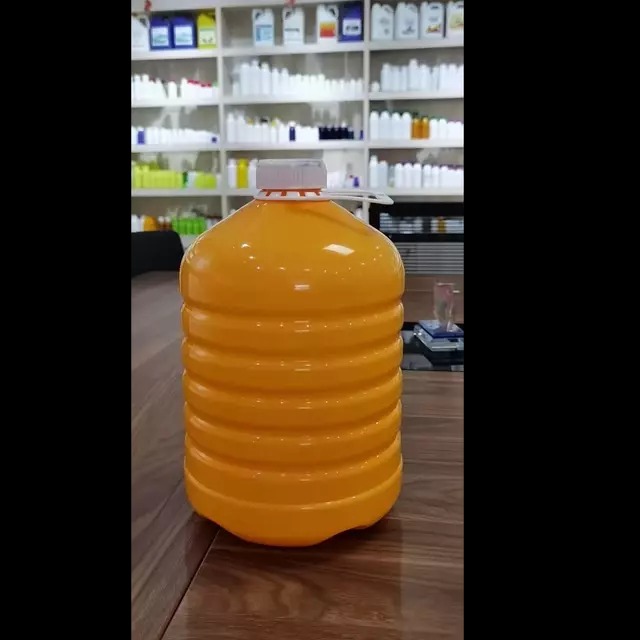
PET (Polyethylene Terephthalate) is widely used in beverage packaging because it offers several advantages:
● Excellent transparency
● High strength-to-weight ratio
● Good barrier properties against moisture and oxygen
● Food safety compliance
These properties make PET ideal for bottled drinks and personal care packaging.
Agricultural packaging often stores substances that can degrade ordinary plastic materials. For this reason, containers may use:
● Reinforced PET
● HDPE (High-Density Polyethylene)
● Polypropylene (PP)
These materials provide improved resistance to chemical corrosion and environmental stress.
Agricultural containers face harsh conditions such as:
● UV exposure
● Temperature fluctuations
● Contact with reactive chemicals
The mold must therefore produce preforms capable of maintaining strength and stability under these conditions.
Different materials influence mold performance. For example:
● HDPE requires different cooling control than PET
● Thicker preforms need longer cooling cycles
● Chemical-resistant plastics may require stronger mold cavities
Engineers must design the mold around these material behaviors to ensure consistent product quality.
Agricultural molds typically produce thicker and stronger preforms. This design ensures that the final container can safely store chemical substances without structural failure.
These molds often include reinforced cavities and optimized material flow channels to maintain uniform wall thickness.
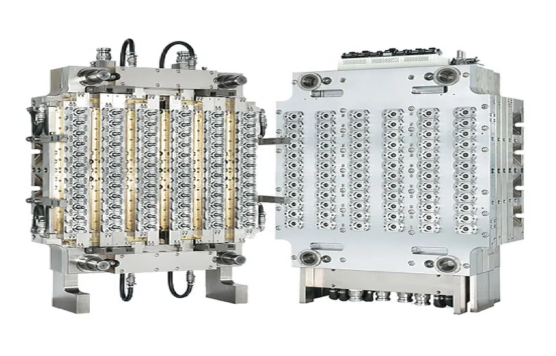
PET preform molds are often designed for high cavitation, meaning they produce many preforms in a single injection cycle.
High cavitation molds support industries where production volumes are extremely large, such as beverage packaging. A single mold may contain dozens or even hundreds of cavities.
Mold Design Focus | Agricultural Preform Mold | PET Preform Mold |
Structural Design | Thick, reinforced preforms | Lightweight preforms |
Cavity Structure | Strong cavities, stable flow | High cavitation layout |
Production Goal | Chemical container strength | High-volume output |
PET molds frequently use valve gate hot runner systems. These systems allow precise control of molten plastic flow, improving consistency and reducing waste.
Agricultural molds may focus more on stable filling and even wall thickness, ensuring the container maintains structural strength.
Agricultural containers often require unique shapes or capacities. Mold manufacturers must adapt the design to meet specific packaging regulations or transportation requirements.
Companies such as ShuangLi Technology provide customized preform mold solutions designed specifically for agricultural packaging applications. Their engineering approach focuses on precision machining and consistent mold performance.
PET molds usually include advanced cooling channel designs. Efficient cooling reduces cycle time and allows high-speed production.
Because beverage packaging requires massive production volumes, even small improvements in cooling efficiency can significantly increase output.
Agricultural preforms often have thicker walls. These thicker sections require controlled and uniform cooling to prevent warping or internal stress.
Engineers design cooling channels to remove heat evenly from the mold cavity.
Production speed differs between these two mold types. PET molds prioritize rapid cycles and high output. Agricultural molds prioritize container reliability. The difference appears clearly in typical production performance.
Production Factor | Agricultural Preform Mold | PET Preform Mold |
Typical Cycle Focus | Structural stability | Speed and efficiency |
Wall Thickness | Thicker walls | Lightweight design |
Cooling Priority | Uniform cooling | Rapid cooling |
Output Goal | Reliable containers | Maximum production volume |
Note: Slightly longer cooling cycles often improve strength in chemical packaging containers.
The typical PET preform production process includes several stages:
1. Raw Material Drying – PET resin absorbs moisture, so it must be dried before molding.
2. Melting and Injection – The dried resin melts and flows into the mold cavity.
3. Cooling – The mold removes heat and solidifies the plastic.
4. Ejection – Finished preforms are released from the mold.
These preforms are later reheated and expanded into bottles using blow molding.
PET preforms require extremely tight dimensional tolerances. Even small variations in neck finish or thread design can affect bottle sealing and filling performance.
Precision mold machining and quality control systems help maintain consistent product dimensions.
Manufacturers often implement several inspection steps, including:
● Visual checks for clarity and surface defects
● Weight verification for consistency
● Dimensional measurements using precision gauges
These inspections ensure that every preform meets strict quality standards before entering the bottle production process.
Before choosing a mold, manufacturers should evaluate several factors:
● Container capacity and shape
● Chemical compatibility requirements
● Production volume targets
● Regulatory compliance standards
These considerations help determine the most suitable mold structure and material.
Industries producing consumer beverages often require extremely high output. In such cases, high-cavitation PET molds paired with automated injection systems are ideal.
Agricultural packaging may operate at lower production volumes but require stronger containers capable of storing aggressive chemicals.
Agricultural packaging often requires specialized container shapes, larger neck openings, or thicker walls.
Custom mold engineering allows manufacturers to create packaging tailored to specific agricultural products.
Experienced mold manufacturers can significantly improve production reliability.
For example, ShuangLi Technology specializes in precision preform mold development. Using advanced CNC machining equipment and strict quality control processes, they produce molds designed for agricultural applications such as pesticide containers and seedling packaging.
Their engineering experience helps ensure consistent production performance and durable container structures.
Tip: Partnering with an experienced mold manufacturer can reduce downtime, improve product consistency, and extend mold lifespan.
Agricultural Preform Mold and PET Preform Mold use the same injection molding principle. However, their engineering priorities differ. Agricultural molds focus on chemical resistance, stronger structure, and durable container design. They help protect pesticides, fertilizers, and other agricultural liquids during storage and transport. PET preform molds aim for lightweight packaging, high production speed, and clear bottle appearance. They support large-scale production for beverage and consumer goods industries.
Choosing the correct mold type helps manufacturers achieve reliable packaging performance and stable production efficiency. The right mold design improves container strength, product safety, and manufacturing consistency. Taizhou Shuangli Technology Co., Ltd. provides precision preform molds designed for demanding packaging applications. Their advanced machining technology and engineering experience help deliver durable molds, consistent product quality, and efficient production solutions for global customers.
A: An Agricultural Preform Mold is a specialized injection mold used to produce preforms for containers that store pesticides, fertilizers, and other agricultural chemicals. These molds are designed to create stronger and thicker preforms so the final containers can safely handle chemical exposure and rough transportation conditions.
A: The main difference lies in design priorities. An Agricultural Preform Mold focuses on chemical resistance, thicker walls, and durable structures. PET preform molds prioritize lightweight bottle design, high clarity, and high-speed production for beverages and consumer goods.
A: Agricultural chemicals can damage ordinary plastic containers over time. An Agricultural Preform Mold creates stronger preforms that improve chemical resistance and container stability. This helps prevent leaks, deformation, or packaging failure during storage and transportation.
A: Containers produced using an Agricultural Preform Mold often use reinforced PET, HDPE, or polypropylene materials. These plastics offer better resistance to pesticides, fertilizers, and other chemical substances compared to standard beverage-grade PET.
A: Costs can vary depending on cavity number, mold size, and customization. An Agricultural Preform Mold may require stronger structural components and customized designs, which can slightly increase manufacturing cost compared with standard PET beverage molds.
A: The decision depends mainly on the final product. If the container will store agricultural chemicals, an Agricultural Preform Mold is the better option due to its durability and chemical resistance. For beverages or cosmetics, PET preform molds provide faster production and lighter packaging.


