
Views: 0 Author: Site Editor Publish Time: 2025-08-19 Origin: Site
When it comes to purchasing a mold for preform, several factors come into play. Whether you are a procurement manager, product engineer, or part of a startup packaging brand, understanding how to choose the right preform mold can significantly impact your production efficiency and long-term costs. This guide aims to provide you with the key technical specifications and buyer scenarios you need to make a confident purchasing decision. By considering critical elements such as cavity count, steel material, runner systems, and maintenance needs, you can select a mold that aligns with both your current and future production goals.
Short Definition: Single-Stage vs. Two-Stage Molds
A preform mold is a crucial piece of equipment in the manufacturing of PET preforms, which are the starting point for creating bottles, jars, and other packaging products. There are two main types of preform molds: single-stage and two-stage. In a single-stage system, the preform is made and immediately blown into the final shape. In contrast, a two-stage system produces the preform first and then reheats it before the blowing process.
The choice of mold type affects not only the initial setup cost but also the long-term operating efficiency. For example, single-stage molds are often preferred for high-volume production runs where speed and cost-efficiency are essential. On the other hand, two-stage systems may offer more flexibility and better precision, particularly in industries that require tighter tolerances and higher-quality preforms, such as beverage packaging.
Typical Manufacturing Workflow and Why Mold Choice Affects Downstream Costs
In the standard workflow for PET preform manufacturing, the injection molding process forms the preform, followed by an inspection stage to ensure product quality, and finally, the blow molding process shapes the preform into the final product. The mold choice significantly impacts each of these stages. For instance, a mold that leads to faster cooling times can reduce cycle times, improving overall throughput.
Additionally, molds with poor design or material selection can lead to defects that require costly rework or downtime during production. Investing in high-quality molds ensures a smoother manufacturing process, lowering the risk of downstream issues that can lead to increased operational costs.
Cavity Count and Cycle Time Trade-offs
When comparing preform molds, one of the most important factors is the cavity count. A mold with multiple cavities allows for the simultaneous creation of several preforms in each cycle, which can significantly boost production speed. However, increasing the cavity count may come at the expense of longer cycle times due to more complex cooling or injection processes.
Finding the right balance between cavity count and cycle time is essential. For high-volume production, high-cavity molds can reduce the cost per unit. However, for lower-volume runs, a mold with fewer cavities may be more cost-effective, especially if the product demands lower production speed or smaller batch sizes.
Steel/Material Selection and Expected Shots
The material used for the mold’s construction is a key determinant of its lifespan and performance. Common steel grades for preform molds include S136 and 1.2316, both of which offer corrosion resistance and high durability. These materials can withstand the stress of high-volume production, extending the mold’s useful life to millions of shots.
Choosing the right steel material also depends on the resin being used for the preform. For example, harsher resins or high-temperature processes may require molds made from tougher steel to prevent damage or wear. Understanding the material compatibility with your production process helps ensure a mold that performs well throughout its life cycle, reducing the risk of breakdowns and costly repairs.
Neck Finish, Thread Spec, and Tolerances
The neck finish, thread specifications, and overall tolerance levels of a preform mold are critical for ensuring that the finished preform meets your product's specifications. Molds must be designed to create precise neck finishes, as any variation can impact the ability to seal or screw on the closure. The tolerances around the thread and neck finish must be consistent to ensure smooth functionality in the final blow molding process.
For customers in the beverage or pharmaceutical industries, where bottle closures must be perfect to maintain product integrity, selecting a mold that ensures these critical dimensions is a top priority. Poor tolerance control can lead to defective products, increasing wastage and the need for rework.
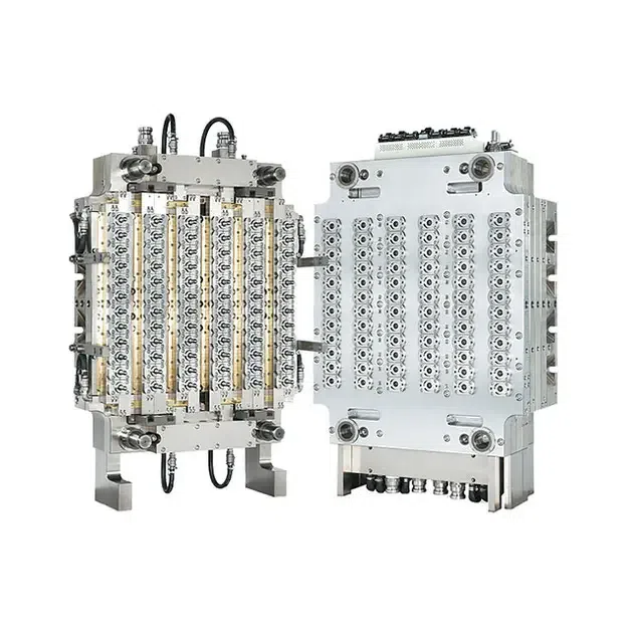
Runner System: Hot Runner Valve Gate vs. Cold Runner
Another important consideration when choosing a preform mold is the runner system, which is responsible for channeling the molten plastic into the cavities of the mold. There are two primary types of runner systems: hot runner and cold runner.
A hot runner system maintains the plastic at the optimal temperature, allowing for faster cycle times and less material waste. It’s typically used in high-volume production to maximize efficiency. In contrast, a cold runner system may be more economical for small to medium-volume operations but can result in more material waste due to the need to recycle the solidified plastic.
When selecting the runner system, consider your production scale and material waste tolerance. Hot runner systems may offer higher initial costs but result in long-term savings through reduced scrap and faster cycle times.
Maintenance Needs and Downtime Risk
One of the most overlooked aspects of mold selection is the maintenance requirements and potential downtime risks. Molds with complex cooling circuits or intricate ejector systems may need more frequent maintenance and repairs. Downtime due to mold failure can significantly affect overall equipment effectiveness (OEE) and lead to delays in production schedules.
Before purchasing, it’s important to assess the mold's design for ease of maintenance. A well-designed mold should offer easy access to cooling channels, ejectors, and other critical components to facilitate repairs and reduce downtime.
Spare Parts and Local Serviceability
When choosing a preform mold, consider the availability of spare parts and local service providers. Molds that are compatible with widely available components or come with reliable service contracts can help reduce long-term costs associated with maintenance and repairs. Additionally, molds that offer a comprehensive warranty or trial period can help mitigate risk and ensure that the mold performs as expected under real-world conditions.
Tool Warranty, Trial Policy, and Sample Validation
Ensure that the supplier offers a clear tool warranty, along with trial and sample validation policies. This gives you the opportunity to test the mold before committing to large-scale production. Many reputable suppliers will offer a trial period during which they can provide sample preforms for validation and approval. By ensuring that the mold performs as expected, you can avoid costly mistakes and production delays.
Must-Have Specs to Include
When writing a Request for Quotation (RFQ) for a mold, be sure to include all critical specifications, such as neck finish drawings, shot weight, cavity count, and resin grade. These details are essential for suppliers to provide accurate quotes and ensure that the mold meets your exact requirements.
Test/Acceptance Criteria and PPAP Steps
Clearly outline the testing and acceptance criteria in your RFQ. This includes defining the Production Part Approval Process (PPAP) steps, which will help you assess whether the mold performs within your specified tolerances and meets all required quality standards.
Ask for Case Studies or Run-Cards to Validate Supplier Claims
To further validate the capabilities of a potential supplier, request case studies or run-cards from previous projects. This will give you insight into their experience with similar production requirements and help you gauge their reliability and expertise.
Low-Volume Prototyping: Aluminium or Low-Cavity Mold
For companies focused on low-volume prototyping or testing, an aluminium mold or a low-cavity mold is often sufficient. These molds are cost-effective and faster to produce, making them ideal for short runs or initial product testing.
High-Volume Beverage Production: Hardened Steel, High Cavities, Hot Runner
For high-volume production, such as in the beverage industry, a hardened steel mold with a high cavity count and hot runner system is recommended. This combination allows for faster cycle times and better durability, making it ideal for large-scale production.
Regulated Products (Cosmetic/Medical): Tighter Validation & Traceability
When producing regulated products, such as those in the cosmetic or medical industries, it’s important to select a mold that offers tighter validation processes and traceability. These molds should meet rigorous quality standards and be capable of producing preforms with precise tolerances.
Choosing the right mold for preform is a critical decision that affects both the quality and efficiency of your production process. By following this guide and considering key factors such as mold material, cavity count, and maintenance needs, you can make an informed choice that aligns with your production goals. If you’re ready to take the next step, contact us today to explore our wide range of precision preform molds, expertly designed to meet the demands of your industry.


