
Views: 0 Author: Site Editor Publish Time: 2026-01-19 Origin: Site
In the manufacturing of medical components, the precision and quality of molds play a pivotal role in ensuring the safety and reliability of the final product. Medical Preform Molds are no exception, and their quality directly impacts the functionality of medical devices, pharmaceutical packaging, and other critical components. At ShuangLi Technology, we specialize in providing high-quality Medical Preform Molds that meet the rigorous standards of the healthcare industry. In this article, we will discuss the most common defects in Medical Preform Mold production, the role of mold design, material considerations, and process controls to minimize defects, ensuring high-quality and consistent production results.
The production of Medical Preform Molds involves various challenges, one of the most significant being the defects that may occur during the molding process. Common defects include:
Warpage: Warping occurs when the molded part cools unevenly, causing it to distort and lose its shape. This is typically due to uneven cooling or improper mold design.
Flash: Flash is the excess material that leaks from the mold cavity during the injection process. This typically happens when there is excessive injection pressure or improper clamp force.
Sink Marks: Sink marks are depressions that form on the surface of the molded part. These are often caused by improper cooling or material shrinkage during solidification.
Short Shots: A short shot happens when the mold does not fill completely, leaving parts of the cavity empty. This is usually due to insufficient injection pressure or incorrect injection speed.
These defects can compromise the integrity of the Medical Preform Mold, leading to defects in the final product. Ensuring that these issues are minimized is crucial for manufacturing high-quality medical components.
Defects in Medical Preform Mold production can often be traced back to two primary sources: mold design and processing errors.
Design Issues: Improper mold design can lead to poor flow of material, uneven cooling, and inadequate venting, all of which can result in defects. For example, poor gate placement can lead to short shots, while inadequate cooling channels can cause warpage.
Processing Errors: Processing parameters such as temperature, pressure, and injection speed play a crucial role in mold quality. If these parameters are not properly controlled, they can lead to defects such as flash or sink marks.
To reduce defects, it is essential to optimize both mold design and processing parameters.
One of the key design features of Medical Preform Molds that helps minimize defects is the balanced flow of material throughout the mold cavity. By ensuring that the material flows evenly, the mold can achieve a uniform thickness across the entire part. This reduces the likelihood of defects such as warpage and sink marks, ensuring that each component is produced to the highest standards.
A uniform wall thickness also helps to achieve consistent cooling, which is crucial for maintaining the integrity of the molded part. Uneven cooling can lead to warping or other surface defects, so it is important to design molds with optimal wall thickness.
Venting and gate positioning are critical aspects of mold design that help prevent defects in the molding process. Venting allows trapped air to escape during the injection process, preventing air pockets and flash. Proper venting ensures that the mold fills completely and evenly, reducing the risk of short shots and other defects.
Gate positioning also plays a significant role in the quality of the molded part. Incorrect gate placement can lead to uneven filling of the mold, causing defects such as short shots or unbalanced material distribution. By carefully selecting the optimal gate position, ShuangLi Technology ensures that our Medical Preform Molds produce consistent, high-quality parts.
Proper temperature and pressure control during the molding process are essential for minimizing defects in Medical Preform Molds. Temperature stabilization ensures that the material is injected at the optimal temperature for proper flow and solidification. Fluctuations in temperature can lead to warping, flash, or other defects.
Pressure stabilization ensures that the material is injected at the right pressure to achieve complete mold filling without causing flash or short shots. By carefully controlling both temperature and pressure, ShuangLi Technology ensures that our molds produce high-quality parts with minimal defects.
To ensure consistent quality, Medical Preform Mold production at ShuangLi Technology involves real-time monitoring and the use of Statistical Process Control (SPC). By continuously monitoring key variables such as temperature, pressure, and material flow, we can detect any deviations from the optimal process parameters in real-time. This allows us to make adjustments as needed to prevent defects and ensure consistent quality across production runs.
SPC techniques help to identify patterns in the molding process, enabling us to predict and prevent potential defects before they occur. By using these advanced process control techniques, we minimize variability and improve the overall reliability of our Medical Preform Molds.
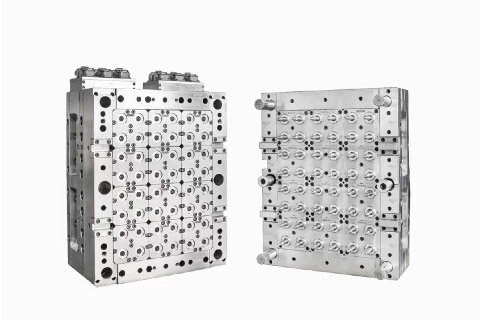
The selection of the right material is crucial for minimizing defects in Medical Preform Molds. Medical-grade resins, such as PEEK (Polyether Ether Ketone) and LSR (Liquid Silicone Rubber), offer exceptional performance in terms of durability, biocompatibility, and resistance to sterilization processes.
Choosing the right resin ensures that the molded parts retain their integrity during use, especially in demanding medical applications. ShuangLi Technology works closely with our clients to ensure that the right material is selected for each specific molding application, helping to minimize defects and maximize product performance.
Different materials exhibit varying levels of shrinkage and flow characteristics during the molding process. Understanding these characteristics is crucial for designing molds that produce defect-free parts. For example, materials with high shrinkage rates may require adjustments in mold design, such as increased cavity size or compensation for material contraction.
Material flow also affects the filling of the mold. Poor material flow can lead to incomplete mold filling, resulting in short shots or unbalanced parts. By understanding the flow characteristics of each material, ShuangLi Technology can design Medical Preform Molds that minimize defects and ensure the highest level of quality.
To ensure that Medical Preform Molds meet the required quality standards, ShuangLi Technology conducts extensive mold trial runs and first article inspections. During these trial runs, we test the mold under real-world conditions to ensure that it performs as expected and produces defect-free parts.
First article inspections involve a detailed examination of the first batch of parts produced using the mold. This inspection ensures that the mold is functioning correctly and that the parts meet all the necessary specifications. If any defects are detected, adjustments are made to the mold design or processing parameters to correct the issue.
Proper documentation is essential for maintaining traceability in the production of Medical Preform Molds. At ShuangLi Technology, we ensure that all molds are fully documented to comply with FDA and ISO standards. This documentation includes detailed records of mold design, materials used, production parameters, and quality control measures.
By maintaining comprehensive records, we ensure that every Medical Preform Mold produced is traceable and meets the highest standards of quality and safety.
Defect | Main Cause | Solution |
Warpage | Uneven cooling | Optimize cooling channels |
Flash | High pressure | Adjust clamp force |
Sink Marks | Uneven cooling | Improve cooling design |
Short Shots | Insufficient pressure | Adjust injection speed |
In conclusion, minimizing defects in Medical Preform Mold production is essential for ensuring the quality and reliability of medical components. By focusing on mold design, material selection, process controls, and quality assurance practices, ShuangLi Technology consistently delivers molds that produce defect-free parts and meet the rigorous standards of the medical industry. Our systematic approach to defect prevention guarantees that our Medical Preform Molds are capable of supporting high-quality production runs with minimal downtime and maximum efficiency.
For more information on how ShuangLi Technology can help you with high-quality Medical Preform Molds, please contact us today.
What are the common defects in Medical Preform Mold production?
Common defects include warpage, flash, sink marks, and short shots, which are caused by issues such as uneven cooling, high pressure, and poor mold design.
How can mold design help reduce defects?
Proper mold design, including balanced flow, uniform wall thickness, and optimized gate positioning, plays a crucial role in minimizing defects during production.
What materials are best for Medical Preform Molds?
Medical-grade materials such as PEEK, PC, and LSR are ideal for Medical Preform Molds due to their durability, biocompatibility, and resistance to sterilization.
What is the importance of temperature and pressure stabilization in mold production?
Temperature and pressure stabilization ensures that the material is injected at optimal conditions, preventing defects such as warpage and flash while ensuring consistent mold filling.


