Views: 0 Author: Site Editor Publish Time: 2026-07-08 Origin: Site
Transitioning a proven product into scaled commercial demand requires a fundamental shift in tooling strategy. A single-cavity prototype setup cannot support high volume profitably. Scaling from one cavity to 4, 16, or 64 cavities is never a simple linear equation. You introduce complex variables involving thermodynamics, clamping force requirements, and significant upfront capital expenditure. Engineering and procurement teams need an objective framework. This guide helps balance upfront tooling investments against per-part cost reductions. You will learn how the selected cavitation strategy aligns with projected product lifecycles. We explore the economics of high-cavitation setups and dispel common cycle time myths. You will also discover the critical differences between family molds and dedicated high-volume tools. By the end, you can audit your supply chain confidently and select the optimal cavity count for your specific manufacturing goals.
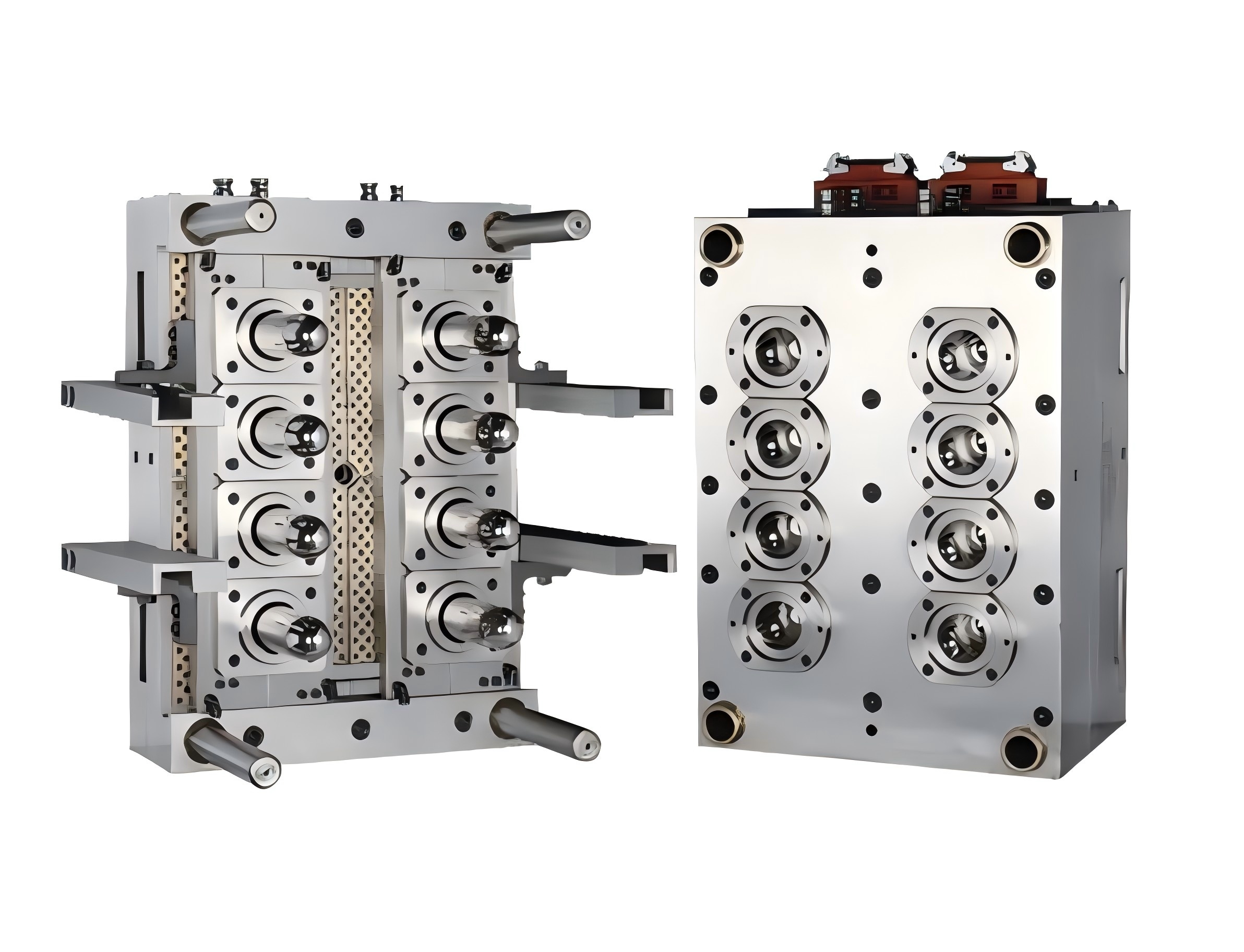
Increasing cavity count exponentially reduces per-part piece price but requires a significantly higher initial investment in tool steel and engineering.
Cycle times do not scale linearly; a 16-cavity mold does not take 16 times longer to cycle than a single-cavity mold, though minor cooling-related increases are expected.
Family molds offer a lower-cost entry for multi-part assemblies but carry higher risks of flow imbalance compared to dedicated multi-cavity injection molds.
High-cavitation tooling demands Class 101 mold standards, requiring hardened steel and rigorous preventative maintenance to guarantee millions of cycles.
Justifying the capital expenditure of a mass production mold requires calculating an exact break-even point. You base this calculation entirely on your projected production volume over the product lifecycle. A well-designed financial model prevents over-investing in unused capacity.
Tooling costs increase naturally alongside cavity count. Larger mold bases consume much more raw tool steel. You also need complex hot runner systems to distribute melted resin evenly across a wider physical footprint. Advanced machining time adds up quickly when cutting dozens of identical geometries. These factors compound the initial invoice price.
However, you must watch out for the diminishing returns of over-cavitation. Pushing from 32 to 64 cavities might double your tool cost. If the marginal savings in piece price takes five years to recover, the tool cost outweighs the benefit. You tie up working capital unnecessarily.
Common cost drivers in high-cavitation tooling include:
Hot runner systems: Valve gates and manifolds add significant cost but reduce material waste.
Cooling line complexity: Conformal cooling channels require specialized machining.
Ejection mechanisms: High cavity counts require highly synchronized, guided ejector plates.
Amortizing the piece-part price helps justify the initial tool cost. Injection molding relies heavily on machine hourly rates and labor costs. We divide these operational expenses across the number of parts produced per cycle. Producing eight parts per cycle divides the machine rate by eight, drastically lowering individual part costs.
We can structure the overall production cost calculation as follows:
Overall Production Cost = Tooling Cost + ((Cycle Time / Cavities) * Machine Rate) + Material Costs.
Material costs remain relatively static per part regardless of cavitation. The true savings emerge from dividing machine time and labor across multiple parts simultaneously.
We must address a core misconception often found in engineering forums. Many professionals wonder if a 16-cavity tool doubles or triples the cycle time of a single-cavity tool. The answer is absolutely no. Scaling cavities does not mean a direct multiplier on cycle duration.
The truth about cycle times lies purely in thermodynamics and part geometry. The thickest wall section of your part dictates the necessary cooling time. The efficiency of your cooling channels also plays a massive role. It does not depend purely on the number of cavities present in the steel block.
A well-designed multi cavity injection mold might see a marginal 10-20% cycle time increase. This slight increase stems from larger runner systems and the broader melt distribution required to fill distant cavities. You will not see a 100% increase in cooling time just because you doubled the cavities. Proper conformal cooling channels mitigate even these minor thermal delays.
Adding cavities impacts machine tonnage directly. We calculate the required clamping force using a standard formula: projected area multiplied by cavity count, multiplied by a material viscosity factor. More cavities mean a larger total projected area.
Pushing cavity counts too high brings specific facility risks. You might easily size out of available machine presses in your supply chain. If your 64-cavity tool requires a 1,500-ton press, but your partner only operates 500-ton presses, you face a major production roadblock. Always calculate tonnage constraints before locking in your cavitation strategy.
Categorizing your solution helps define the project scope. You must compare dedicated plastic injection tooling against family molds for distinct production scenarios. Both approaches serve a purpose, but they cater to completely different volume requirements and quality standards.
Family molds work best for low-to-medium volume assemblies. You use them when multiple different parts require identical production quantities. Crucially, these components must use the exact same resin and color compound.
Cost advantages certainly exist here. You only pay for one mold base and one setup process in the press. This lowers your initial entry barrier for complex multi-part consumer goods or enclosures. However, processing windows remain notoriously narrow.
Family molds present significant rheological challenges. Balancing fill rates for parts of different sizes and geometries proves incredibly difficult. This imbalance often leads to severe flash on small parts. Conversely, you might see short shots or sink marks on larger parts within the same shot.
Dedicated multi-cavity injection mold setups provide superior process control. You experience lower scrap rates, easier troubleshooting, and higher yield stability.
Strategic Comparison Chart | ||
Feature | Dedicated Multi-Cavity Tooling | Family Tooling |
|---|---|---|
Ideal Volume | High to ultra-high volume | Low to medium volume |
Part Geometry | Identical parts only | Mixed parts for an assembly |
Fill Imbalance Risk | Low (easily balanced mathematically) | High (complex flow dynamics) |
Upfront Cost | High per part design | Lower overall (consolidated base) |
Implementation risks grow alongside your cavity count. Engineers face real hurdles ensuring the 32nd cavity produces an identical part to the 1st cavity. Precision deviations multiply quickly without stringent controls.
Complex runner systems introduce unique physics. Shear heating and pressure drops occur across the melt delivery path. The plastic traveling to the outer edges experiences different thermal conditions than plastic near the sprue. This causes inconsistent shrinkage rates and dimensional variations.
We must use artificial balancing before cutting steel. Mold flow analysis (DFM) helps identify these issues early. Designers adjust runner diameters and gate sizes to artificially balance the flow. This ensures every cavity fills simultaneously at the exact same pressure.
High-volume environments create intense wear and tear. Parting lines, gates, and ejector pins degrade rapidly over millions of cycles. Flashing becomes inevitable if the steel begins to deform under high clamping pressure.
Specifying SPI Class 101 standards is non-negotiable for high-volume runs. A true precision injection mold uses hardened tool steel, typically H13 or S7 grades. Guided ejection mechanisms prevent pin deflection. Strict preventative maintenance ensures the tool functions flawlessly over its intended lifespan.
Best practices for maintenance include:
Cleaning parting lines daily to prevent flash buildup.
Inspecting hot runner tips periodically for degradation.
Lubricating ejector systems to prevent seizing during continuous operation.
Running regular water line descaling to maintain cooling efficiency.
Evaluating potential partners requires a strict framework. You must audit a toolmaker or molding partner to ensure absolute high-cavity readiness. A supplier skilled in single-cavity prototypes may struggle immensely with a 64-cavity commercial tool.
Look for in-house Moldflow® simulation expertise. Suppliers need this capability to predict thermal behavior and shear rates accurately. Outsourcing this step often creates communication gaps and delays.
High-speed, tight-tolerance CNC machining capabilities matter immensely. Only top-tier equipment ensures true cavity-to-cavity interchangeability. The chosen plastic part manufacturing mold vendor must prove their machining tolerances. Ask to see their equipment list and quality control inspection reports. Coordinate measuring machines (CMM) must verify every steel insert before assembly.
Watch out for unrealistic cycle time promises. If a vendor guarantees lightning-fast cycles without providing a comprehensive thermal analysis, step away immediately. They are guessing.
Vague specifications regarding tool steel grades act as another red flag. They might list P20 instead of a proper H13 for a high-volume guarantee. P20 steel will simply not survive a multi-million cycle demand. It deforms under constant pressure.
Finally, look closely at the maintenance plan. A quote lacking a clear preventative maintenance schedule signals future downtime. A reliable partner always factors maintenance intervals into the piece-part pricing agreement.
Selecting the optimal cavity count requires strategic balance. You must weigh available upfront capital against machine tonnage limits. Target piece prices ultimately drive the final decision. High cavitation lowers per-part costs significantly but demands flawless engineering execution and superior tool steel.
Encourage your procurement and engineering teams to act decisively. Request a comprehensive Design for Manufacturability (DFM) report early in the process. Create an ROI matrix comparing 2, 4, and 8-cavity scenarios. Analyze the cooling data and flow simulations before committing to a final tool design.
A: No. While it significantly reduces the machine time cost per part, material costs remain static, and the larger tool requires a higher-tonnage press (which carries a higher hourly rate).
A: Through scientifically balanced runner designs, rigorous mold flow analysis, and high-precision CNC machining that ensures identical dimensions and thermal properties for every cavity.
A: A properly maintained Class 101 mold built with hardened tool steel (like H13 or S7) should comfortably exceed 1,000,000 cycles.
A: Standard multi-cavity tools cannot. Overmolding or 2K/multi-shot molding requires specialized multi-barrel injection molding machines and highly complex rotary tooling.