
Views: 0 Author: Site Editor Publish Time: 2026-01-12 Origin: Site


When it comes to manufacturing medical components such as bottles, vials, and other critical items used in the healthcare industry, ensuring the highest quality and safety is essential. Medical Preform Molds play a significant role in molding these products to meet strict regulatory standards, particularly FDA-grade quality. At ShuangLi Technology, we are committed to providing superior Medical Preform Molds that not only meet but exceed the rigorous demands of the medical industry.
Our custom molds are meticulously engineered with precision and designed to maintain consistency and durability with every batch. By focusing on advanced technologies and using only high-quality materials, we ensure that our molds support the production of medical packaging and devices that deliver unmatched reliability. In this article, we will delve into the top 15 features of Medical Preform Molds that contribute to their FDA-grade quality and safety.
Achieving FDA-grade quality requires Medical Preform Molds to adhere to stringent regulatory standards, particularly those set forth by the FDA. The FDA 21 CFR Part 820 outlines the requirements for medical device manufacturers, ensuring that products are consistently produced and controlled according to quality management systems. Additionally, Medical Preform Molds must comply with ISO 13485, which specifies the requirements for quality management systems related to medical devices. The ISO 10993 framework also ensures that materials used in Medical Preform Molds meet biocompatibility standards to ensure safe usage in the human body. By meeting these comprehensive standards, we ensure that every mold produced by ShuangLi Technology is safe and reliable.
In the medical industry, biocompatibility is essential for the materials used in Medical Preform Molds. The materials must be non-toxic, non-reactive, and safe for contact with human tissues. This is where the importance of choosing the right medical-grade material becomes clear. Furthermore, cleanroom production is vital for preventing contamination during the molding process. Cleanrooms are carefully controlled environments designed to maintain extremely low levels of airborne particles, ensuring that no contaminants compromise the integrity of the medical components being produced. At ShuangLi Technology, our molds are manufactured in state-of-the-art cleanroom environments, providing the necessary conditions to meet FDA-grade standards and ensuring the safety of the final product.
Precision and accuracy are the cornerstones of high-quality medical product manufacturing. In the production of Medical Preform Molds, tight tolerances are essential for ensuring that each mold meets exacting specifications. Even minor deviations from the required measurements can lead to defective components, potentially compromising product safety. At ShuangLi Technology, we specialize in creating Medical Preform Molds with extremely tight tolerances that guarantee the accuracy and consistency required for the production of medical components. Moreover, dimensional stability ensures that our molds retain their shape and function throughout the entire production process, minimizing the chance of defects.
Consistency is key when it comes to medical products. Inconsistent mold performance can lead to varying quality between batches, which is unacceptable in the medical industry. Whether producing hundreds or thousands of medical components, it is essential that every batch is identical. Medical Preform Molds designed for high-volume production must ensure that every component meets the same high-quality standards. ShuangLi Technology’s Medical Preform Molds are designed to maintain consistency across multiple production cycles, guaranteeing that each batch of medical devices or packaging components is uniform and reliable.
The material used to manufacture Medical Preform Molds is of utmost importance, as it directly impacts the performance and durability of the medical components produced. Materials such as PEEK (Polyether Ether Ketone), PC (Polycarbonate), and LSR (Liquid Silicone Rubber) are commonly used in medical applications due to their strength, transparency, and biocompatibility. PEEK, in particular, is known for its exceptional mechanical properties and resistance to chemicals, high temperatures, and radiation, making it ideal for use in medical mold applications. PC offers excellent transparency and strength, while LSR is perfect for flexible parts, such as seals and gaskets.
Sterilization is a critical process in the production of medical devices and packaging, and the materials used in Medical Preform Molds must be able to withstand harsh sterilization methods. Whether through autoclaving, gamma radiation, or ethylene oxide sterilization, the materials must retain their integrity without degradation. Medical Preform Molds made from materials such as LSR and PEEK are highly resistant to these sterilization techniques, ensuring that the components produced can be safely sterilized without compromising their structural integrity.
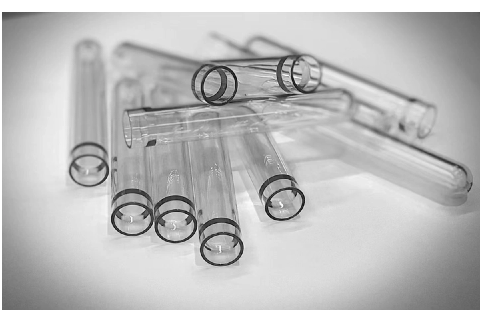
A well-designed mold is crucial for reducing defects and ensuring the quality of the molded components. Features such as venting, ejection systems, and balanced flow are essential for preventing common molding defects like air pockets, incomplete fills, and flash. Venting allows trapped air and gases to escape, preventing air bubbles from forming inside the molded part. Proper ejection systems ensure that parts are removed smoothly from the mold without damage, while a balanced flow design ensures that material is evenly distributed, preventing uneven thickness or incomplete molding.
Choosing the right mold design is another crucial factor in reducing defects. Multi-cavity molds, which allow for multiple components to be molded simultaneously, can increase efficiency and reduce cycle times in high-volume production. This design is particularly beneficial for medical packaging production, where large quantities of uniform parts are needed. On the other hand, single-cavity molds are more suitable for smaller production runs or custom components, offering flexibility and precision for specialized designs.
Cooling is an integral part of the molding process, as it helps to solidify the material and ensure that the mold produces high-quality components. Uneven cooling can result in defects such as warping, sink marks, or cracking. Optimizing the cooling channels within the Medical Preform Molds design ensures that the mold cools evenly, preventing these issues and ensuring the consistency of the final product. ShuangLi Technology’s molds are designed with optimized cooling channels to improve efficiency and reduce cycle times, making the manufacturing process faster and more cost-effective.
Scientific molding is a technique that applies principles of statistical process control to achieve repeatability and consistency in the molding process. By precisely controlling variables such as temperature, pressure, and material flow, scientific molding ensures that each molded part meets the exact specifications required. This method is particularly useful in high-volume production, where consistency and precision are critical. At ShuangLi Technology, we use scientific molding techniques to ensure that our Medical Preform Molds consistently produce parts that meet the highest quality standards.
Feature |
Benefit |
Impact on Quality |
Tight Tolerances |
Precise fittings |
Reduces rejections |
Medical-Grade Materials |
Biocompatibility |
Ensures patient safety |
Cleanroom Production |
Contamination prevention |
Guarantees sterile environment |
Dimensional Stability |
Consistency across batches |
Minimizes defects |
Balanced Flow Design |
Even material distribution |
Prevents air pockets and defects |
Multi-Cavity Mold Design |
Increased efficiency |
Faster production cycles |
Cooling Channel Optimization |
Uniform cooling |
Reduces warping and defects |
Real-Time Monitoring |
Process control |
Enhances consistency |
Venting Systems |
Air and gas escape |
Prevents incomplete fills |
Ejection Systems |
Easy part removal |
Reduces damage to parts |
PEEK Material |
High chemical resistance |
Ideal for harsh environments |
PC Material |
High transparency and strength |
Ensures clarity and durability |
LSR Material |
Flexibility and durability |
Ideal for seals and soft features |
FDA and ISO Compliance |
Regulatory adherence |
Meets industry standards |
Repeatability |
Consistent production |
Ensures uniformity in every part |
The features outlined above are essential in ensuring that Medical Preform Molds meet FDA-grade quality and safety standards. By focusing on precision, regulatory compliance, and advanced manufacturing techniques, ShuangLi Technology provides molds that help produce safe and reliable medical products. Our molds are designed to perform consistently across high-volume production runs, ensuring that your medical components meet the necessary regulatory requirements and maintain the highest level of safety. For more information on our high-quality Medical Preform Molds and how they can benefit your production process, please contact us today.
What makes a medical preform mold FDA-compliant?
FDA-compliant Medical Preform Molds meet strict regulatory standards, including ISO 13485 and ISO 10993, ensuring biocompatibility and safety in medical applications.
How does ShuangLi Technology ensure mold consistency?
ShuangLi Technology uses tight tolerances, dimensional stability, and scientific molding techniques to ensure that each Medical Preform Mold consistently meets high-quality standards.
What materials are best for medical preform molds?
Materials such as PEEK, PC, and LSR are ideal for medical preform molds due to their strength, transparency, and resistance to sterilization processes.
How does mold design impact the quality of medical products?
Features such as balanced flow design, multi-cavity mold systems, and optimized cooling channels significantly reduce defects and improve the overall quality of medical products.


