
Views: 0 Author: Site Editor Publish Time: 2026-09-03 Origin: Site


While the core and cavity often steal the spotlight in manufacturing, the neck finish remains the most critical tolerance zone. A micro-millimeter deviation in the neck ring quickly leads to capping failures. It causes severe leaks. Ultimately, it results in the downstream rejection of the final blown bottle. We cannot ignore this vital component. You must view the PET preform mold neck ring as more than just a simple structural boundary. It serves as a primary driver of cooling efficiency. It heavily influences cycle time reduction. It also guarantees thread precision in modern injection molding operations. In this guide, you will learn how this high-precision component dictates the success of your molding cycles. We will explore its mechanical functions, thermal management capabilities, and maintenance protocols. By understanding these dynamics, you can optimize production, reduce scrap rates, and maintain a competitive edge.
The PET preform mold neck ring serves three core functions: forming the thread finish, securing the preform during ejection, and facilitating critical neck cooling.
Advanced cooling channel designs within the neck ring directly dictate cycle times; poor thermal management leads to thread deformation and high scrap rates.
Evaluating replacement or upgraded neck rings requires analyzing material hardness (e.g., S136 steel), precision machining tolerances, and interchangeability.
Proper integration of high-quality neck rings and supporting preform mold accessories reduces costs through minimized downtime and extended tooling lifespan.
Molding flawless bottles starts right at the top. The PET preform mold neck ring executes three vital mechanical jobs during every cycle. These functions require absolute synchronization.
First, it forms the thread and finish. The neck ring molds the exact geometry of the bottle's thread. It creates the pilfer-proof ring and shapes the support ledge. If you produce standard PCO 1881 or 29/25 dimensions, this component ensures absolute dimensional accuracy. The internal contours of the ring dictate how well the final cap will seat. A perfectly machined thread prevents carbonation loss in beverage applications. It guarantees consumers experience a smooth opening torque.
Second, it handles ejection and stripping. Once the plastic cools, you need to extract the preform safely. The neck ring acts as the primary gripping point. It extracts the preform from the core. It does this without scratching or warping the delicate body. During the machine's opening stroke, mechanical cams or hydraulic slides pull the neck ring halves apart. They release the preform into the cooling tubes or free-fall drop zones. This release must happen flawlessly. Any hesitation causes surface scuffing or bent preforms.
Finally, it creates a robust mold seal. We call this the taper lock. It forms a tight interface between the neck ring, the core, and the cavity. High injection pressures push molten plastic forcefully. The taper lock prevents plastic leakage or flashing. The angle of this taper must perfectly match the corresponding mold plates. When the machine clamps shut, the tapers wedge together. They form an impenetrable barrier against the pressurized melt.
During the primary injection phase, the molten PET enters at extreme velocities. The neck ring acts as the ultimate boundary. It securely hugs the core pin. This tight relationship prevents core shift. If the neck ring lacks rigidity, the core pin deflects. Deflection causes uneven wall thickness. Uneven walls lead to burst bottles during the blow molding stage. Precision engineering prevents this chain reaction entirely.
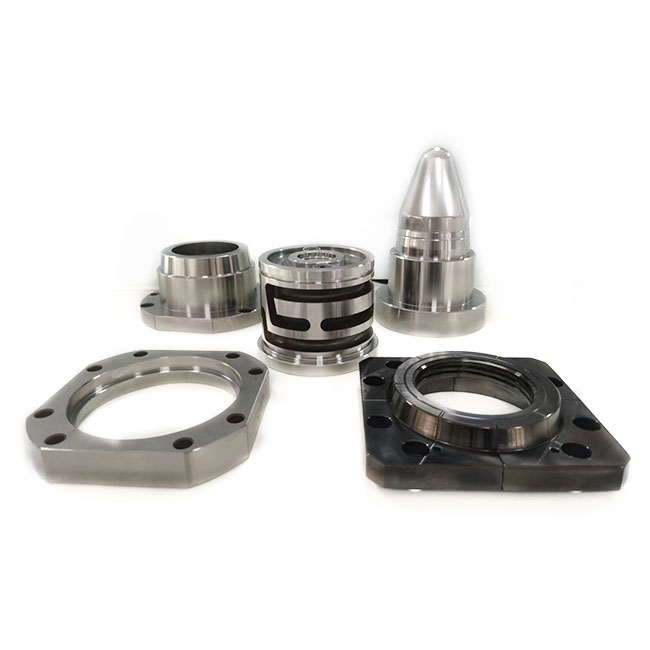
Manufacturers often overlook the thermal dynamics happening at the top of the mold. However, the neck region remains the thickest part of the preform. It contains dense clusters of plastic forming the threads and support rings. It is also the hardest part to cool. Neck ring cooling efficiency acts as the ultimate bottleneck for your overall cycle time. If you wait too long for the neck to harden, your entire cycle slows down.
To solve this, engineers rely on sophisticated simulations. Applying robust PET preform moldflow analysis allows us to optimize water channel designs directly within the neck ring. This predictive tool maps out thermal behavior before cutting any steel. It helps us prevent dangerous hotspots. It evaluates turbulent flow rates within the micro-cooling channels. It also stops premature crystallization in the thick plastic sections. When PET cools too slowly, it turns milky white and brittle. We avoid this entirely through simulated thermal optimization.
Advanced software evaluates several crucial metrics during the simulation phase. Engineers analyze pressure drops across the neck geometry. They monitor volumetric shrinkage patterns carefully. The software highlights areas prone to residual stress. We then adjust the cooling circuit pathways accordingly. Sometimes, we introduce complex conformal cooling channels. These channels wrap around the thread geometry flawlessly. They extract thermal energy faster than traditional straight-drilled lines.
When you optimize cooling, you secure strict dimensional stability. Proper thermal management directly prevents ovality. Ovality occurs when the neck cools unevenly and warps into an elliptical shape. It also stops thread shrinkage during the final cooling phase. Consistent neck dimensions guarantee flawless capping performance further down the production line. You simply cannot achieve this stability without precision cooling channels. They extract heat rapidly and uniformly.
Scaling production introduces significant engineering hurdles. Maintaining perfect alignment across 48, 72, or even 96 cavities tests the limits of toolmaking. Tolerance stack-up becomes a severe issue in large systems. A tiny deviation in one cavity multiplies across the entire grid. Thermal expansion across massive steel plates also shifts cavity centers. The neck rings must accommodate these micro-movements while maintaining their taper locks perfectly.
These dynamics change drastically when molding wide-mouth containers. A high-cavity jar bottle preform mold demands special attention. Larger neck diameters naturally increase the available surface area exposed to injection pressure. This extra area increases the potential for flashing. Consequently, you must apply enhanced clamping force distribution across the entire mold base. Jar preforms also feature thicker walls and heavier gram weights. The neck rings must absorb more heat and withstand greater mechanical shock during ejection.
Machine mechanics also play a huge role. You must match the tooling to the specific injection machine. Toggle-clamp machines deliver fast cycles. However, they sometimes struggle to apply even pressure across massive platens. Hydraulic clamp machines provide uniform tonnage. Uniform tonnage is critical for large jar molds. The massive neck rings need balanced pressure to maintain their taper locks. Without balanced pressure, the center cavities might flash while the outer cavities remain sealed.
Maintenance strategies must also adapt. High-cavity systems require modularity. You need perfectly interchangeable neck ring halves. This interchangeability allows operators to perform rapid cavity replacements. You can swap out a damaged component right on the machine. You avoid pulling the entire heavy mold base offline. This strategy saves countless hours of production time. It keeps your overall equipment effectiveness metrics exceptionally high.
Upgrading your tooling requires strict evaluation. You must assess several mechanical factors to ensure longevity. We recommend evaluating materials, precision, and compatibility before making any purchasing decisions. Tooling failures stem from poor upfront specifications.
First, consider material selection and hardness. Standard tool steels degrade quickly under continuous PET injection cycles. We prefer premium anti-corrosion options like Stavax ESR or S136 steel. These high-hardness metals resist wear effectively. They maintain their polished surfaces longer. Some manufacturers also integrate copper alloy inserts. These specific inserts drastically enhance thermal conductivity where it matters most. They pull heat away from the thickest thread sections rapidly.
Next, demand extreme machining precision. The acceptable tolerance level typically sits within 0.005mm. You need this extreme accuracy to prevent any parting line mismatch. Even a slight misalignment causes visible defects on the final bottle thread. These defects act as stress concentrators. They eventually cause the bottle neck to split during the capping process.
Surface treatments also extend component life. We highly recommend specialized coatings on high-wear surfaces. Diamond-Like Carbon (DLC) coating protects the tapers and sliding components. It provides self-lubricating properties. It reduces friction and extends the maintenance interval. It also stops metal galling between the neck ring and the cavity plate.
Finally, verify overall compatibility. Your new neck rings must integrate seamlessly into your current setup. They must work perfectly alongside your existing hot runners. They should also match your other preform mold accessories. Proper alignment between lock rings, core pins, and neck components prevents unexpected mechanical binding. When components interact smoothly, the entire system lasts longer.
Valve gate timing also impacts component longevity. The hot runner system injects plastic rapidly. If the valve gates open unevenly, pressure spikes occur. These spikes shock the neck rings forcefully. Over millions of cycles, this uneven stress causes micro-cracking. You must ensure your controller system fires flawlessly. Sourcing your components from a single reliable manufacturer often solves these integration headaches entirely. Consistent quality control across all parts guarantees a robust mold life.
Neck Ring Assessment Specifications
Criteria | Standard Specification | High-Performance Upgrade |
|---|---|---|
Material Base | Standard Tool Steel (e.g., P20) | S136 / Stavax ESR (Hardened) |
Machining Tolerance | ±0.01mm | ±0.005mm |
Surface Coating | None (Polished Steel) | Diamond-Like Carbon (DLC) |
Thermal Inserts | Solid Steel Construction | Integrated Copper Alloys |
Cooling Channel Layout | Linear Drilled Passages | Conformal Cooling Paths |
Even premium components fail if operated incorrectly. You must identify operational risks early. We often see three common failure modes in the field. Understanding these risks helps you build better preventative maintenance routines. Anticipating problems saves significant repair costs.
Parting Line Flashing: Plastic leakage often appears near the thread. This usually stems from severe wear on the taper lock. As the mold opens and closes millions of times, the metal slightly degrades. Sometimes, inadequate clamping force causes micro-separations between the plates. You must implement strict maintenance protocols. Regularly measure taper wear using precision gauges. You should also verify your machine's tonnage distribution across the entire platen. Re-machine or replace the rings before the wear exceeds acceptable limits.
Thread Damage During Ejection: Stripped threads ruin preform batches instantly. This damage occurs due to premature mold opening. Inadequate cooling also leaves the plastic too soft during extraction. The cam rollers pull the neck rings apart, tearing the soft plastic. You must carefully calibrate your ejection timing. Ensure the plastic solidifies completely before the gripper engages. Monitor the cooling water temperature and flow rate closely. Slow down the opening stroke slightly if you notice consistent thread scuffing.
Cooling Channel Scaling: Poor water quality acts as a silent killer for injection molds. It causes rapid mineral buildup inside the neck ring channels. Hard water deposits calcium and magnesium on the internal steel walls. This scaling acts as a powerful insulator, destroying cooling efficiency. Your cycle times will mysteriously increase over several months. You need accessible water channel designs to combat this. You must also perform routine descaling procedures. Flush the system with mild acidic solutions regularly to keep the heat transfer optimal.
These mitigations keep your production running smoothly. Ignoring them leads to frequent breakdowns. Protect your tooling investment through proactive system checks.
The PET preform mold neck ring stands as a truly high-precision investment. It is far more than a simple bracket holding plastic. It actively safeguards your cycle times. It guarantees final product integrity from the injection machine to the capping line. When you optimize this single component, you elevate the entire production line. Efficient cooling and precise ejection dictate your profitability.
Procurement and engineering teams must look beyond initial costs. Do not let upfront piece-price dictate your tooling decisions. Instead, prioritize exceptional material quality. Insist on advanced cooling channel designs. Demand the tightest machining tolerances available. These structural factors determine your long-term success. Cheaper rings often lead to expensive production halts. High-quality steel and superior coatings always pay for themselves.
Take action today to secure your manufacturing output. Request a comprehensive technical consultation from your tooling partner. Review your current mold conversion capabilities to see if an upgrade makes financial sense. Alternatively, schedule a full audit of your existing mold performance. You will quickly discover hidden areas ripe for cycle time improvement and scrap reduction. A proactive approach to tooling maintenance transforms a good facility into a world-class operation.
A: The lifespan heavily depends on your specific cycle counts, maintenance routines, and material hardness. However, manufacturers typically evaluate them for detailed refurbishment or complete replacement between 3 to 5 million shots. Consistent lubrication and proper water quality management can push this lifespan further.
A: Yes, you certainly can. This process happens often through a formal mold conversion. Many plants move from the older PCO 1810 standard to PCO 1881 for lightweighting benefits. You just must ensure the preform weight and the existing core design allow for the dimensional adjustment.
A: A visible parting line usually indicates mechanical wear on the neck ring taper. It can also stem from a slight misalignment within the main mold base. Additionally, insufficient clamping force allows micro-separation during high-pressure injection, which pushes plastic into the seams.


