
Views: 0 Author: Site Editor Publish Time: 2026-08-09 Origin: Site


The neck ring defines the critical thread and neck finish of a PET preform. It ensures proper closure sealing for the final bottle. When this component degrades, you face a harsh business reality. Delayed replacement leads directly to compounding scrap rates. You will quickly experience downstream capping failures during the filling process. Overall Equipment Effectiveness (OEE) rapidly declines as a result of these bottlenecks. Recognizing the right time for intervention is essential to protecting your production yields. This article provides an evidence-based framework for identifying early neck ring wear. We will help you evaluate various replacement options confidently. You will learn how to execute changeovers while keeping machine downtime to an absolute minimum. Protect your production line today by understanding when and how to swap these essential components effectively.
Neck finish deformation directly correlates to downstream sealing failures. The capping machine applies precise torque to seal the bottle. Deformed threads prevent the cap from engaging correctly. You will notice caps popping off or sitting crooked. This leads to immediate leakage during carbonation or transit. The final consumer experiences a flat beverage or a wet package.
You must quantify the cost of scrap to understand the urgency. A single worn cavity in a high-cavitation tool exponentially increases rejected parts per shift. Imagine a 72-cavity mold running a six-second cycle. One defective neck ring produces ten bad preforms every minute. You will generate thousands of defective parts before the end of a single shift. This isolated wear destroys overall batch profitability.
Degraded cooling channels within the neck ring lead directly to cycle time creep. Cooling water leaves mineral deposits inside these channels over time. This buildup insulates the steel and reduces thermal conductivity. You must increase the cooling time to solidify the preform properly. Adding just half a second to your cycle time severely damages your daily output.
Worn components also cause severe mechanical strain on the injection molding machine. Misaligned neck rings generate excessive friction during mold opening and closing. This alignment friction forces the machine to work harder. The increased mechanical strain accelerates wear on tie bars and toggle mechanisms. It ultimately leads to premature failure of expensive machine hardware.
Common Mistakes: Ignoring minor flash on the neck finish. Operators often increase clamp tonnage to force the mold closed. This masks the problem temporarily but destroys the mating tapers permanently.
You need objective data to justify component replacements. Relying on guesswork leads to premature spending or disastrous quality failures. Watch for these four critical triggers.
Industry standards define acceptable tolerance limits for neck finishes. The PCO1881 standard requires microscopic precision to guarantee gas retention. Wear on the internal thread profile prevents the cap from locking. Ovality serves as a primary symptom of uneven cooling. It can also indicate mechanical fatigue across the ring halves. Once the neck finish falls outside acceptable tolerances, you must replace the component.
Loss of preload inevitably leads to plastic leakage. The neck ring halves must meet with immense pressure to contain the molten PET. Surface wear on the mating faces reduces this clamping force. Plastic leaks into the microscopic gaps and creates flash. Flash on the neck finish causes immediate rejection at the filling plant. It poses a safety hazard and ruins the aesthetic appeal.
Mating tapers align the neck ring perfectly within the mold cavity. Constant friction wears these tapers down gradually. Wear on the tapers prevents proper locking during the injection phase. Technicians often respond by programming unsafe increases in clamp tonnage. This brute-force approach damages the mold base and crushes the remaining taper profile.
Establish industry-standard shot-count thresholds for your baseline evaluation. A high-quality neck ring typically lasts millions of cycles. However, actual wear depends heavily on the specific resin type. Processing recycled PET (rPET) introduces abrasive contaminants into the melt stream. These abrasives act like sandpaper against the mold steel. Faster cycle speeds also accelerate thermal and mechanical fatigue.
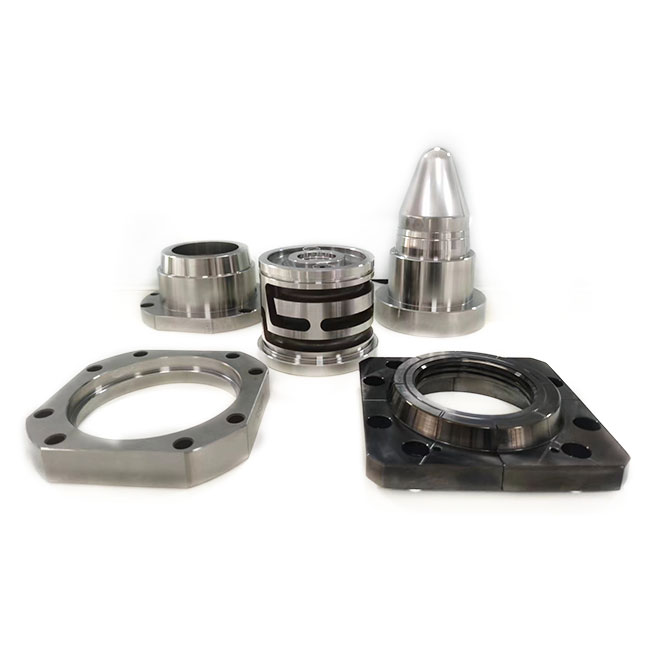
Once you identify unacceptable wear, you must choose a corrective path. Facility managers usually face three distinct options. You can replace the parts exactly, upgrade the mold entirely, or attempt refurbishment.
Using OEM-standard parts offers the safest path to recovery. Drop-in compatibility guarantees a fast and predictable changeover. You must ensure matching metallurgy to maintain thermal consistency across the tool. Verified cooling channel designs restore your original cycle times instantly.
Beware the hidden costs of low-tier aftermarket parts. Cheap alternatives often use inferior steel with poor thermal conductivity. They wear out faster and require longer cooling phases. You will lose more money in cycle time creep than you saved on the purchase price.
Sometimes wear provides an opportunity to pivot. Upgrading to lightweight neck finishes reduces long-term material costs. The beverage industry constantly moves toward lighter threads to save resin. Weigh the upfront engineering cost of a conversion carefully. Compare this investment against the projected resin savings over the next three years.
Facility teams rarely refurbish neck rings compared to other mold components. The strict dimensional tolerances make remachining highly impractical. Machining a worn face changes the overall geometry of the ring. You risk creating ovality or mismatched thread profiles. Replacing the component entirely provides a much safer return on investment.
Evaluation Options Comparison
| Strategy | Primary Advantage | Primary Risk | Ideal Scenario |
|---|---|---|---|
| Exact Replacement | Restores original performance quickly. | High upfront cost for premium OEM parts. | Standard production runs needing immediate OEE recovery. |
| Mold Conversion | Massive long-term resin savings. | Significant engineering downtime required. | Transitioning to lightweight industry standards (e.g., PCO1881 to 26mm). |
| Refurbishment | Lower immediate out-of-pocket expense. | High risk of dimensional non-compliance. | Emergency stop-gap measure while waiting for new parts. |
Diagnosing specific worn rings in 48, 72, or 96-cavity molds presents a unique challenge. You cannot afford to tear down the entire tool to find one bad cavity. You must employ strict quality control sampling techniques. Operators should trace defects back to a specific cavity number molded into the preform. This targeted approach isolates the failing component quickly.
Evaluate the return on investment carefully before swapping parts. Replacing all neck rings simultaneously resets the tool's baseline performance. This batch approach guarantees uniform cooling and consistent part quality across every shot. Replacing only the failing units saves money today but risks inconsistent part quality tomorrow. Individual replacement also guarantees repeated machine downtime as other aging cavities fail sequentially.
Cycle Time Creep Impact Chart
| Cavity State | Average Cycle Time | Daily Scrap Rate | OEE Impact |
|---|---|---|---|
| New Baseline | 6.0 Seconds | < 0.1% | Optimal (95%+) |
| Isolated Wear (1 Cavity) | 6.2 Seconds | 1.5% | Moderate Drop |
| Systemic Wear (Batch) | 7.5 Seconds | 8.0% + | Critical Failure |
Preparation dictates the success of your replacement procedure. You need the correct tooling and alignment jigs positioned beside the machine before you begin. These specialized jigs ensure precise installation and prevent accidental damage to the delicate tapers.
Always execute comprehensive pre-installation checks. Verify water channel flow before mounting the new components. A blocked cooling channel will destroy the new neck ring immediately. Inspect O-ring integrity thoroughly. Pinched O-rings cause internal water leaks that ruin production runs.
The job continues even after you bolt the mold closed. You must dry-cycle the machine to validate alignment. Watch and listen for any unnatural friction. Validate the clamp tonnage distribution across the entire platen. Uneven tonnage indicates a seated part is misaligned.
Execute strict First-Article Inspection (FAI) protocols. Measure the new preforms against your baseline dimensional drawings. Verify dimensional accuracy using optical measurement tools. Confirm a total lack of flash at the parting line before releasing the machine to production.
Excellent preform mold maintenance extends the life of your new components significantly. Establish daily and weekly cleaning routines for your operators. Prevent carbon build-up on the venting surfaces. Resin off-gassing causes chemical damage to the mold steel over time. Integrate dedicated neck ring inspections into the broader preventative maintenance schedule. Consistent cleaning removes abrasive dust and protects your expensive tooling.
Best Practices: Always use non-abrasive cleaning solvents on the thread profiles. Train technicians to measure cavity wear using standardized gauge pins every 500,000 cycles.
Maintaining a highly efficient injection molding process requires a critical balance. You must maximize component lifespan while rigorously protecting final part quality. Pushing a neck ring past its useful life compromises downstream sealing and destroys brand reputation. Dimensional drift, flash generation, and cycle time creep serve as undeniable warning signs.
Evidence-based replacement acts as a direct investment in your OEE. It is never just a maintenance expense. Proactive changeovers eliminate unpredictable downtime and stabilize your production schedules. Consistent part quality keeps your filling lines running at maximum velocity.
Take action today to secure your yields. We recommend consulting with a specialized tooling engineering partner immediately. They can audit your current mold performance objectively. Let experts help you source precise, OEM-standard spare parts tailored to your exact production environment.
A: A high-quality neck ring typically lasts between 3 to 5 million cycles. However, this lifespan varies wildly based on mold steel quality and cycle times. Running abrasive materials like rPET reduces this lifespan significantly. Excellent maintenance hygiene extends the baseline drastically.
A: Yes. Compromised cooling channels leave the thread area too hot during ejection. Mechanical wear also causes the plastic to stick inside the thread profile. The preform warps and bends as the machine forces it out of the mold.
A: You must balance cost, lead time, and precision. Original manufacturers guarantee drop-in compatibility but often carry higher premiums. Specialized mold makers offer excellent value and speed. Ensure the vendor strictly adheres to your original dimensional drawings regardless of your choice.


