


| Quantity: | |
|---|---|


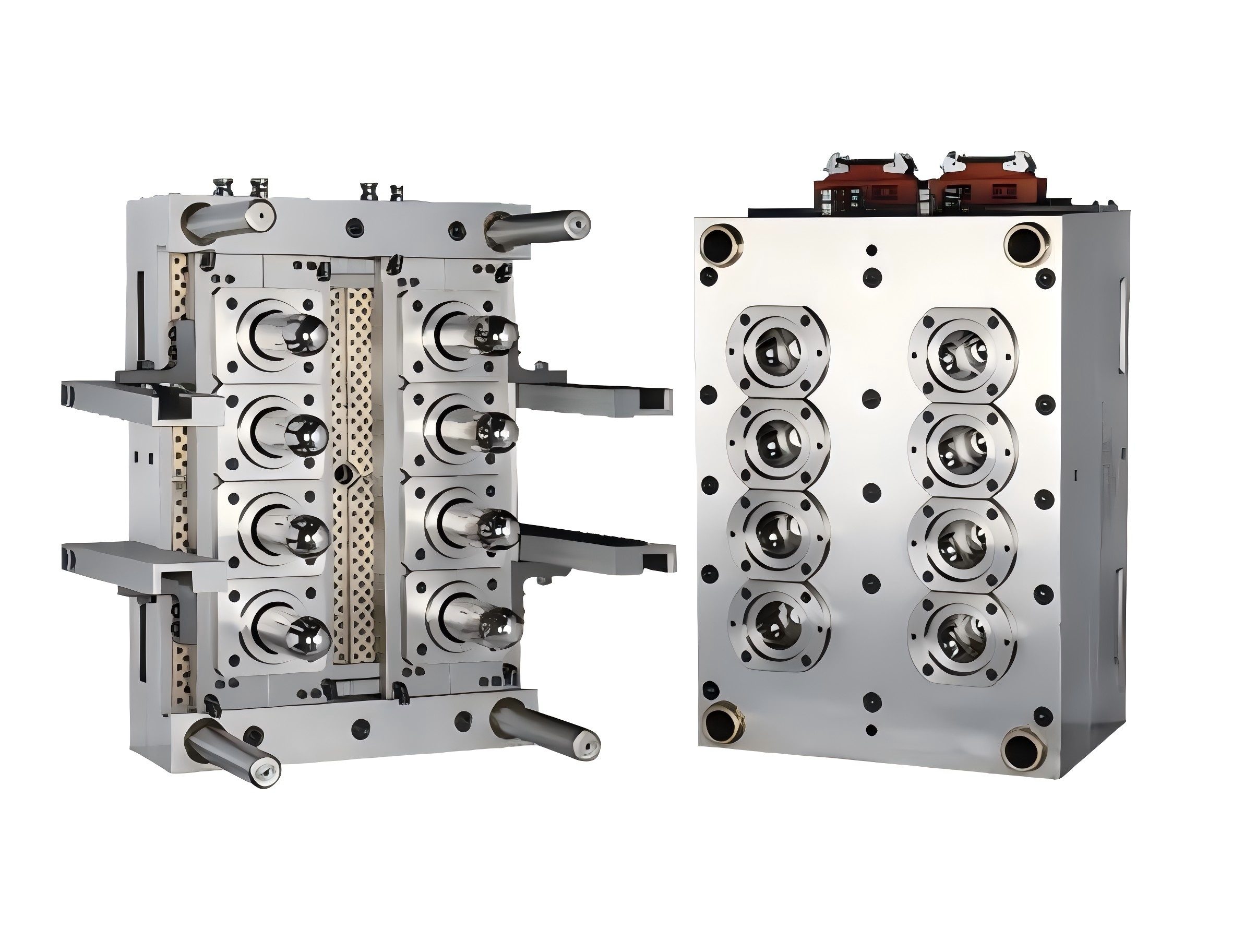
In a multi-cavity mold, all cavities operate during the same injection cycle. If one cavity fills, cools or releases differently from the others, production quality can become inconsistent even when the injection molding machine is running normally.
Common production concerns include:
Different preform weights between cavities
Uneven wall thickness
Inconsistent neck dimensions
Short shots in individual cavities
Different gate appearance
Uneven cooling
Core shift
Difficult ejection
Different preform temperatures after molding
For this reason, ShuangLi evaluates the mold as a complete multi-cavity system rather than simply repeating the same cavity many times.
The arrangement of cavities inside the mold directly affects runner design, cooling layout, mold dimensions and machine compatibility.
During mold development, the cavity layout is planned according to:
Number of cavities
Preform diameter and length
Preform weight
Neck finish
Mold plate dimensions
Hot runner arrangement
Cooling channel space
Injection molding machine specifications
A properly planned cavity layout helps create more consistent processing conditions across the complete mold and provides sufficient space for cooling, hot runner components and maintenance.
As cavity numbers increase, balanced melt delivery becomes increasingly important.
The hot runner system must distribute molten PET to every cavity under controlled thermal and flow conditions. If some cavities receive material earlier or under different conditions, differences in filling and preform weight may occur.
For multi-cavity projects, the hot runner design focuses on:
Balanced melt distribution
Stable temperature control
Consistent filling between cavities
Controlled gate performance
Reduced runner waste
Convenient maintenance access
The actual hot runner configuration is selected according to the preform specification, cavity layout and production requirements.
Cooling is one of the most important factors in high-output preform molding.
In a multi-cavity mold, it is not enough for the mold to simply have sufficient cooling. Heat must also be removed consistently from each cavity.
Uneven cooling may cause some preforms to remain hotter than others, which can affect dimensional stability, release performance and overall production consistency.
ShuangLi designs cooling circuits according to the mold layout and preform geometry, with particular attention to:
Core cooling
Cavity cooling
Gate area cooling
Neck area cooling
Water flow distribution
Cooling access for individual cavity positions
The objective is to reduce temperature differences between cavity positions and support stable continuous production.
More cavities can increase the number of preforms produced per shot, but the highest available cavity number is not always the best choice.
The suitable configuration depends on the complete production system.
The total material required for each shot increases as cavity number and preform weight increase.
For example, a production line making lightweight water bottle preforms and a line making heavier packaging preforms may require very different mold and machine configurations even if their target output is similar.
Required hourly or daily output is an important starting point when selecting cavity count.
The mold configuration should provide sufficient production capacity without creating an unnecessarily complex or oversized tooling system.
The injection molding machine must have enough usable shot capacity for the total PET weight required by all cavities.
Increasing cavity number generally increases the projected molding area and processing requirements. Available machine clamping force therefore needs to be considered before the mold design is finalized.
A high-cavity mold has a larger physical footprint. Mold dimensions must fit the actual injection molding machine.
Higher production output also increases cooling demand. Mold cavity count should therefore be considered together with the plant's available cooling system.
For higher-output production, preform removal, conveying and post-mold handling should also be able to keep up with the molding cycle.
When increasing production capacity, buyers sometimes focus only on changing from a lower-cavity mold to a higher-cavity mold.
In practice, the complete production line should be checked.
Before recommending a cavity configuration, the following information is useful:
| Project Information | Why It Matters |
|---|---|
| Preform Weight | Determines material required per shot |
| Preform Dimensions | Affects cavity pitch and mold size |
| Neck Finish | Determines neck ring design |
| Target Output | Helps determine required productivity |
| Machine Shot Capacity | Limits total material per cycle |
| Clamping Force | Determines machine suitability |
| Tie-Bar Spacing | Limits mold dimensions |
| Platen Size | Determines installation space |
| Mold Thickness Range | Confirms mold-machine compatibility |
| Cooling Conditions | Influences continuous production capability |
| Take-Out System | Must handle the required production rate |
ShuangLi can review these parameters before mold design to help avoid selecting a cavity number that does not match the available equipment.
Multi-cavity production requires repeatability between individual mold positions.
Core, cavity, neck ring and gate components are machined and inspected according to the approved tooling drawings.
Particular attention is given to areas that directly influence preform consistency:
Proper alignment helps control wall thickness distribution and reduces the risk of one side of the preform becoming thicker than the other.
The preform neck is a critical finished area that must match the required closure specification. Dimensional consistency between cavities is therefore especially important.
Gate geometry and cooling can affect preform appearance and processing stability. Multi-cavity molds require consistent gate conditions from one cavity to another.
Individual stack components should work together accurately so that differences between mold positions are minimized.
A multi-cavity mold is usually selected because production volume is important.
For that reason, mold design should consider not only first-sample quality but also continuous operation.
ShuangLi multi-cavity mold projects can be developed with attention to:
Repeated production cycles
Stable cavity filling
Cooling consistency
Component accessibility
Routine maintenance
Replacement of wear components
Spare component planning
This helps production teams maintain the mold without unnecessarily interrupting the complete production line.
In a high-cavity mold, a problem with one mold position should be easier to identify and service.
Core, cavity, neck ring, gate and related components can be designed as serviceable mold elements depending on the project configuration.
This approach provides several practical advantages:
Easier inspection of individual cavity positions
More convenient replacement of worn components
Reduced maintenance complexity
Better spare-part management
Less disruption to long-term production
For customers operating the mold continuously, spare components can also be discussed during the tooling project.
For a multi-cavity PET preform mold, checking only one sample is not sufficient to understand overall mold performance.
During mold trial and project verification, attention should be given to samples from different cavity positions.
Typical evaluation items can include:
Preform weight consistency
Complete cavity filling
Neck and thread dimensions
Preform appearance
Gate condition
Wall distribution
Mold release
Flash
Short shots
Cavity-specific defects
If a defect repeatedly appears in the same cavity position, the corresponding mold stack, gate, hot runner or cooling condition should be inspected.
ShuangLi develops each multi-cavity preform mold according to the customer's production requirements.
| Item | Customization |
|---|---|
| Mold Type | Multi-Cavity PET Preform Mold |
| Preform Material | PET |
| Cavity Number | Based on production and machine requirements |
| Preform Weight | Customized |
| Preform Dimensions | Customized |
| Neck Finish | According to drawing or closure |
| Cavity Layout | Project Specific |
| Hot Runner | According to mold configuration |
| Cooling Layout | Multi-Cavity Optimized Design |
| Core | Precision Machined |
| Cavity | Precision Machined |
| Neck Ring | Customized |
| Gate Structure | According to Preform Design |
| Mold Size | Matched to Injection Molding Machine |
| Spare Components | Available according to project requirements |
| Mold Trial | Available before delivery |
Final specifications are confirmed after reviewing the preform and equipment information.
For a new project, ShuangLi recommends starting with the required preform and production capacity rather than choosing the cavity count first.
Provide:
Preform drawing
Preform weight
Neck finish
Material
Bottle or packaging application
Provide the required hourly or daily production capacity.
ShuangLi reviews machine specifications including shot capacity, clamping force, platen dimensions and tie-bar spacing.
Based on the above information, a suitable cavity number and mold layout can be evaluated.
The runner and cooling systems are developed around the confirmed cavity arrangement.
Core, cavity, neck ring and other components are precision machined, inspected and assembled.
Samples from different mold positions can be checked to evaluate overall multi-cavity performance before delivery.
A higher-cavity mold may be worth considering when:
Existing mold capacity cannot meet growing orders
Production is running close to maximum available hours
More preforms are required from the same production area
A new higher-capacity production line is being installed
The manufacturer wants to reduce the number of molding cycles required for the same output
However, increasing cavity count should always be evaluated together with machine capacity and auxiliary equipment.
Simply increasing the number of cavities without checking the complete system may result in insufficient shot capacity, inadequate mold space, cooling limitations or downstream handling problems.
Not always.
The original mold base, cavity pitch, hot runner manifold and cooling channels are generally designed around a specific cavity layout.
If production needs increase significantly, it may be necessary to evaluate:
Whether the existing machine can support more cavities
Whether any existing mold components can be reused
Whether a new mold base is required
Whether the hot runner needs to be redesigned
Whether cooling capacity is sufficient
Whether a completely new mold provides better long-term value
ShuangLi can review the existing preform and production equipment before recommending the appropriate approach.
ShuangLi focuses on the R&D and manufacturing of precision preform molds and provides customized tooling according to customer product and equipment requirements.
For multi-cavity projects, the company's mold development focuses on the issues that directly affect mass production: cavity layout, component consistency, mold-machine matching, cooling, manufacturing accuracy and maintainability.
ShuangLi also uses CNC machining and inspection equipment in mold manufacturing and has supplied preform mold products to customers in multiple international markets.
A higher cavity count produces more preforms per molding cycle, but overall efficiency also depends on cycle stability, machine capacity, cooling and downstream handling. The cavity number should therefore be matched to the complete production line.
Repeated cavity-to-cavity weight differences may be related to melt distribution, hot runner conditions, valve or nozzle condition, gate performance or individual cavity processing conditions. The affected cavity positions should be checked systematically.
Provide the machine model, shot capacity, clamping force, tie-bar spacing, platen size and mold thickness range. These specifications can then be checked against the proposed mold layout and total preform weight per shot.
A mold is normally designed around a defined preform specification. If different preform designs or weights are required, the tooling structure and interchangeable component possibilities should be evaluated during the project stage.
For faster evaluation, provide the preform drawing, weight, neck finish, required production capacity and injection molding machine specifications.
If your current PET preform production capacity is no longer sufficient, or you are planning a new high-output production line, ShuangLi can evaluate the mold together with your actual preform and equipment.
Send us your:
Preform drawing
Preform weight
Neck finish
Current or planned injection molding machine
Existing cavity number, if applicable
Required hourly output
Based on these requirements, ShuangLi can develop a Multi-Cavity PET Preform Mold configuration suitable for stable mass production.


